
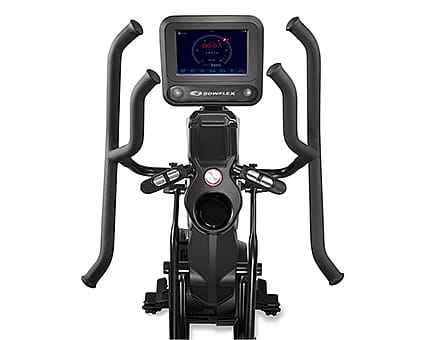


12 Benefits Why Strength Training Is Important for You
Everyone has probably heard of strength training. Often, people think of large muscular men like Arnold Schwarzenegger, Dwayne Douglas Johnson (The Rock), or closer to home, The Dutch Giant (Olivier Richters). Don’t worry, strength training is not only for men and women who want to become extremely muscular.
Do you want to improve your health and muscle mass? Then strength training is definitely something you should do. Whether you are a man or woman, just starting out or already more advanced. Strength training offers many health benefits, which I will explain below.
In this blog about strength training:
- What is strength training?
- The benefits of strength training
- More strength & muscles
- Better overall health
- Stronger bones (bone density)
- Better posture
- Stress reduction
- Better sleep
- Weight loss through better metabolism / faster metabolism
- More confidence
- More energy
- Improvement in daily activities and mobility
- Maintain muscle strength, strength and muscle mass decrease with age
- Increases independence in older age
- Factors to consider
- Strength training for men and women
- Rest (listen to your body)
- Which fitness equipment to use for strength training?
- Conclusion
What is strength training?
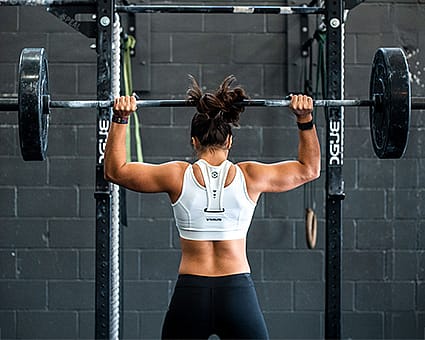
Strength training is a form of physical exercise where you use resistance to increase your muscle strength, muscle mass, and muscular endurance. The resistance you can use may come from your own body weight, free weights such as barbells, dumbbells, and kettlebells, but also from strength machines such as a strength station, chest press, leg press, or another single station.
The goal of strength training is often to improve your strength and the size of your muscles. Increasing strength and muscle size is achieved by challenging your muscles.
The benefits of strength training
1) More strength & muscles
This is one of the most well-known benefits of strength training. By training your strength, you ensure that your muscles become stronger and larger. Strength training causes tiny (microscopic) tears in the muscles that repair themselves during rest after your workout. So, unfortunately for the men, it takes some time to build muscles, and for the women, don’t worry – you won’t quickly look like a bodybuilder.
2) Better overall health
Besides increasing strength and muscle mass, strength training also improves your overall health.
o A stronger heart and blood vessels
To function properly, your muscles need oxygen. This makes your heart work harder to pump oxygen, which can improve cardiac function. The increased demand for oxygen and nutrients by your muscles during training will also improve your blood circulation. Improved circulation provides more efficient delivery of oxygen and nutrients to other cells in the body.
If you regularly do strength training, it can also lower your blood pressure. Lower blood pressure means less stress on the heart muscles and blood vessels, reducing the risk of heart disease.
It also improves insulin sensitivity in the muscles, which can help prevent or manage type 2 diabetes. Strength training increases calorie burning by growing muscle mass. Additionally, it helps burn fat and increase muscle mass, which is important for overall cardiovascular health (in combination with proper nutrition, of course).
o Brain (mental health / cognitive functions)
Besides a more muscular / better-shaped body and improved cardiovascular system, strength training provides another amazing benefit. It also gives your brain a positive boost. As mentioned earlier, strength training improves blood circulation, including to the brain. This ensures better delivery of oxygen and nutrients to your brain cells, which can enhance brain function, including attention, memory, and executive functions.
Strength training also improves mood. It increases neurotransmitter levels such as endorphins, serotonin, and dopamine (more on this later). A better mood is good for everyone, right?
o Reduced risk of injuries and illness
Another major benefit is that strength training can reduce the risk of injuries and illnesses. We already mentioned a lower risk of cardiovascular disease, better insulin sensitivity, and prevention / management of type 2 diabetes. But did you know it also makes you more resilient to external forces, reducing the chance of injuries during daily (sports) activities?
If you sit a lot (for example at an office), strength training helps prevent injuries. You strengthen your core, back, glutes, and quads, providing better support for your head, back, neck, and so on.
3) Stronger bones (bone density)
Besides a firmer and more muscular body, strength training provides another lifelong benefit: it strengthens bones by increasing bone density. As you age, muscle mass and bone density slowly decline, increasing the risk of fractures (especially in older age). Strength training also reduces the risk of osteoporosis (bone loss).
4) Better posture
As muscle mass increases, your posture also improves. To achieve better posture, it is important to train your core, back, and legs well. Many people have poor posture due to weaker upper and lower back muscles. Strength training strengthens these muscles, providing better support for your spine, promoting a straight posture, and reducing or preventing discomfort.
If you work a lot sitting down (e.g., office work), you may recognize it in yourself or others – slouching in front of a screen. Occasional poor posture is usually fine, but prolonged incorrect posture can slowly cause problems such as back and neck pain, or in worse cases, a hernia. It is especially important to ensure balance between muscle groups for optimal support.
5) Stress reduction
Stress is a response of your body reacting to changes. It is a normal part of life and can arise from any situation or thought that someone perceives as threatening or harmful. Stress is not necessarily harmful. In an acute stress situation (usually short-term, fight-or-flight response), stress hormones such as adrenaline, cortisol, and noradrenaline are produced. However, prolonged stress is not good for you (chronic stress). The effects can vary per person. You may experience headaches, stomach aches, back and neck pain, high blood pressure, poor sleep, difficulty concentrating, or forgetfulness.
Strength training can help reduce stress. Strength training can reduce stress, anxiety, and depression. During strength training, your body produces endorphins (the happiness hormone), lowers the stress hormone cortisol, improves energy levels, and provides a positive distraction.
6) Better sleep
After an intensive workout, your body needs rest to recover properly. You physically tire your body. People who do strength training often experience deeper and better sleep. Additionally, since your cortisol level (stress) decreases, you can relax faster and fall asleep more easily.
7) Weight loss through a better metabolism / faster metabolic rate
During your workouts, you burn calories; during cardio, this is often more compared to strength training (assuming similar intensity and duration). However, a good strength training session still burns a considerable amount of calories. As strength training builds more muscle mass, more energy is required to maintain it. This results in additional energy expenditure even after your workouts.
After your workout, muscle tissue remains “active,” which is called the “after-burn” effect or “excess post-exercise oxygen consumption (EPOC).” Your body requires extra oxygen to recover and return to its resting state, meaning your body continues to burn calories at a higher rate after training.
8) Increased self-confidence
Strength training gives your self-confidence a real boost! After a few weeks of strength training, you can often see changes in your body. You get a more toned figure, lower body fat percentage, and improved posture. Checking yourself in the mirror and seeing your body change often provides a sense of pride and satisfaction.
Additionally, you can continue to challenge yourself by gradually increasing your training weight, which also boosts self-confidence (but avoid ego-lifting).

5) Stress reduction
Stress is a response of your body reacting to changes. It is a normal part of life and can arise from any situation or thought that someone perceives as threatening or harmful. Stress is not necessarily harmful. In an acute stress situation (usually short-term, fight-or-flight response), stress hormones such as adrenaline, cortisol, and noradrenaline are produced. However, prolonged stress is not good for you (chronic stress). The effects can vary per person. You may experience headaches, stomach aches, back and neck pain, high blood pressure, poor sleep, difficulty concentrating, or forgetfulness.
Strength training can help reduce stress. Strength training can reduce stress, anxiety, and depression. During strength training, your body produces endorphins (the happiness hormone), lowers the stress hormone cortisol, improves energy levels, and provides a positive distraction.
6) Better sleep
After an intensive workout, your body needs rest to recover properly. You physically tire your body. People who do strength training often experience deeper and better sleep. Additionally, since your cortisol level (stress) decreases, you can relax faster and fall asleep more easily.
7) Weight loss through a better metabolism / faster metabolic rate
During your workouts, you burn calories; during cardio, this is often more compared to strength training (assuming similar intensity and duration). However, a good strength training session still burns a considerable amount of calories. As strength training builds more muscle mass, more energy is required to maintain it. This results in additional energy expenditure even after your workouts.
After your workout, muscle tissue remains “active,” which is called the “after-burn” effect or “excess post-exercise oxygen consumption (EPOC).” Your body requires extra oxygen to recover and return to its resting state, meaning your body continues to burn calories at a higher rate after training.
8) Increased self-confidence
Strength training gives your self-confidence a real boost! After a few weeks of strength training, you can often see changes in your body. You get a more toned figure, lower body fat percentage, and improved posture. Checking yourself in the mirror and seeing your body change often provides a sense of pride and satisfaction.
Additionally, you can continue to challenge yourself by gradually increasing your training weight, which also boosts self-confidence (but avoid ego-lifting).
Factors to consider
Although strength training offers numerous benefits, there are also several factors to consider, such as:
• Possible injuries
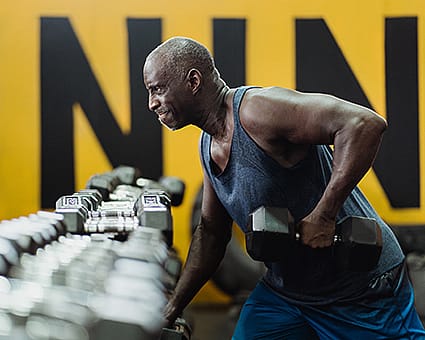
There is a risk of injury if you perform strength exercises incorrectly or use weights that are too heavy. To minimize injuries, applying proper techniques is important. Fitness machines, for example, reduce the risk of injury because they help you perform exercises with correct form and technique.
• Discipline and motivation
Strength training is a long-term commitment; only then will you notice the full effects and benefits. You need good discipline to achieve your set goals. Additionally, if you’re just starting strength training, you may become over-motivated and try to do too much too quickly, which can lead to overtraining or injuries. Therefore, make a plan and training schedule for yourself and gradually increase the weight over time.
• Time and money
Time is your most valuable asset. If you want to do strength training more often, you need to invest time (trust us, it’s worth it many times over).
There is also a (small) financial investment, for example in a gym membership, or if you want to set up a home gym, the purchase of fitness equipment. Additionally, you may need sports clothing and possibly sports nutrition or supplements.
Although there are some disadvantages to strength training, they can be well managed and minimized with proper preparation. Moreover, the benefits of strength training far outweigh the drawbacks.
Strength training for men and women
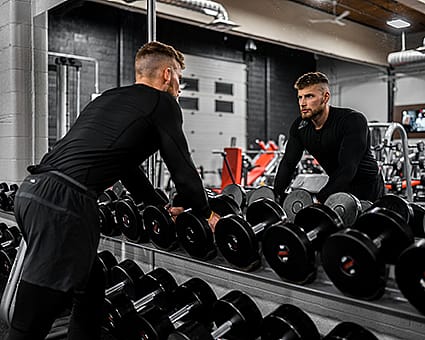
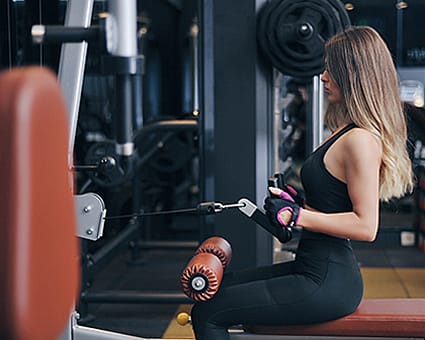
Strength training is practiced by both men and women. We also see that it is becoming increasingly popular among women, and that almost as many women as men participate in strength training. We often get asked whether women will become very muscular (which is not always the goal for women). Don’t worry, you won’t develop a bodybuilder’s physique quickly. Women can safely do strength training to achieve a firmer body with beautiful shapes.
Besides having different body types, men and women often pursue different fitness goals. While men mostly aim for larger arm, back, and chest muscles, women often focus on firmer glutes, abdomen, and (upper) legs. Among women, the well-known “bingo wings” under the arms are often targeted as well.
Rest (listen to your body)
It is very important to give your body enough rest. If you only do strength training and therefore train the same muscle groups intensely 5 times a week, your body will not get enough rest to recover properly. Training too much or too intensely with insufficient rest increases the risk of overtraining and muscle fatigue. During strength training, tiny micro-tears occur in your muscles, which repair during rest, allowing you to build more muscle mass.
It is important to give your body time to replenish the energy stores used (such as glycogen). Glycogen is a complex carbohydrate stored mainly in the muscles and liver and is one of the most important energy sources for your body. During your workout, glycogen is broken down into glucose, which your muscles use to produce energy.
After your workout, glycogen stores in your muscles are depleted, and without sufficient rest and proper nutrition, your body cannot effectively replenish these stores. The body restores these stores by consuming carbohydrates after your training session.

Which fitness equipment can you use for strength training?
Your body roughly consists of over 650 muscles! A large portion of these muscles can be improved through strength training. Some tools you can use for strength training are:
- Strength station / multigym: On these compact machines, you can perform various strength exercises to train your muscle groups. They are ideal for home use and when you have limited space.
- Dumbbells / adjustable dumbbells: These are weights you hold in one hand. They come in various weights and can be used for a wide range of strength exercises.
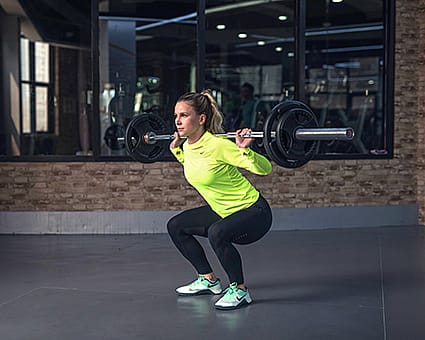
- Barbells: These long bars are loaded with weight plates on both sides. They are often used for exercises such as bench press, squats, and deadlifts.
- Kettlebells: These are weights with handles. They are ideal for swinging movements and provide a combination of strength and cardio exercises.
- Smith machine: A device with a fixed barbell. Often used for squats or bench presses in a controlled environment.
- Cable machines: These devices use cables to provide resistance and are very versatile. They can be adjusted to train different muscle groups.
- Leg press: If you want to focus on your leg muscles, you can use a leg press.
- Pulley stations: Stations with pulleys that allow you to perform various exercises, such as lat pulldowns or cable rows.
- Resistance bands: Elastic bands of varying strengths that provide resistance during exercises.
- Power racks or squat racks: Sturdy structures mainly designed for heavy exercises like squats and bench presses. They provide safety, especially when training without a spotter.
- Leg curl and leg extension machines: Specific machines for training the hamstrings and quadriceps.
- Pull-up bars: For pull-ups and chin-ups, mainly targeting back and arm muscles.
Conclusion
Strength training is essential for maintaining a healthy lifestyle at any age, but especially as you get older. It helps you maintain and increase your muscle mass and strength, which counteracts sarcopenia (the loss of muscle mass with age). It also increases your bone density, which reduces the risk of fractures, and it improves your overall stability and functional strength — both essential for everyday activities such as carrying the shopping and climbing stairs.
Although there are a few points to be aware of with strength training, such as injuries caused by poor technique or overtraining, these can be minimised relatively easily by using the correct techniques, not training too heavy, and getting enough rest and the right nutrition to support muscle recovery. This means giving your body enough time to replenish the energy reserves you have used and to repair the small tears that occur in the muscles during training.
Various types of fitness equipment and accessories, such as dumbbells, barbells, kettlebells and resistance bands, can be used to build a varied and complete training programme that works all the major muscle groups. Finally, it is worth noting that strength training is suitable for both men and women, despite a number of common misconceptions. While men and women often have different fitness goals and want to focus on different muscle groups, everyone can benefit from a well-structured strength training programme.
In short, strength training is crucial for maintaining muscle mass and strength, increasing your bone density and preserving your independence later in life. With the right training techniques, intensity, rest and good nutrition, the points of attention can be kept to a minimum and everyone, regardless of gender or age, can enjoy the many benefits of strength training.
Would you like to start strength training and are you looking for advice or additional information?
Our fitness specialists will be happy to help you with any questions you have about the strength training equipment you need. That way you can make a well-informed choice and get the most out of your strength exercises. You can contact our fitness specialists on +31 85 773 00 57, send an e-mail or visit our showroom in Volkel, the Netherlands.