
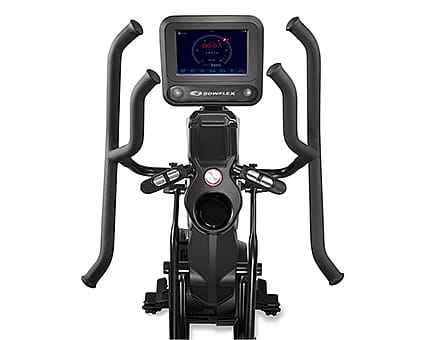


Discover Which Treadmill Suits You Best
Are you looking for a new treadmill? Then your search for the perfect treadmill can feel like navigating through a maze of options. Whether you are a beginner taking your first steps in the fitness world or an experienced runner looking for an upgrade, finding the right treadmill is important to get the most out of your training sessions. In this blog, I will guide you through the different types of treadmills available and what to pay attention to during your search. From understanding the different models and features to aligning your choice with your personal fitness goals and budget, I will take you step by step to your ideal treadmill. Let’s start this journey together and discover the treadmill that will take your health and fitness to the next level.In this blog about finding a suitable treadmill:
- The importance of choosing the right treadmill
- How do you want to use the treadmill? What is your goal?
- A treadmill for home or professional use?
3.1. Treadmills for home
3.2. Treadmills for professional/commercial spaces - The intensity of use
4.1. Occasional use
4.2. Regular use
4.3. Intensive use
4.4. Treadmills for walkers
4.5. Treadmills for joggers
4.6. Treadmills for runners - What to consider when buying a treadmill
- The different types of treadmills
6.1. Foldable treadmills
6.2. Non-foldable treadmills
6.3. Manual treadmills without motor
6.4. Treadmills with incline - Treadmills for different budgets
- Conclusion
How do you want to use the treadmill? What is your goal?
When choosing the ideal treadmill, it is important to think about how you want to use the treadmill and what personal goals you want to achieve with it. Are you planning to work on your fitness at home in peace, or are you looking for a professional treadmill for intensive running training? It is also important to consider your frequency of use: do you want to use the treadmill occasionally for light exercises such as walking, or do you plan regular intensive walking or running sessions? Or maybe you want to use the treadmill for rehabilitation after surgery or an accident. In addition, your body type plays a role; larger or heavier individuals may require a sturdier model. Or perhaps you want to use the treadmill in a commercial space such as a gym, physiotherapy practice, or hotel.
A treadmill for home or professional use?
When it comes to choosing a treadmill, an important consideration is the environment in which you want to use it. Treadmills for home use and those for professional/commercial spaces have different features and are often equipped differently.
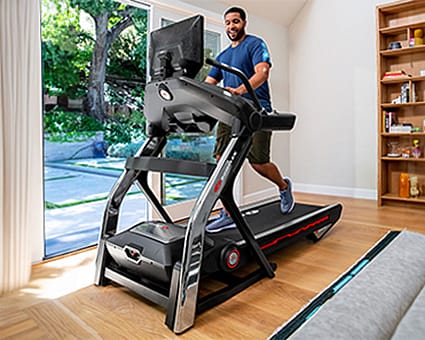
Treadmills for home
Treadmills for home are designed with ease of use and space-saving in mind for a household environment. They are often more compact, quieter, and may be foldable for easy storage. While they are robust and durable, they usually have different features and functions compared to commercial models. These treadmills are ideal for individuals or families who want to walk, jog, or run regularly without the need for advanced training capabilities.
Treadmills for professionals / commercial spaces
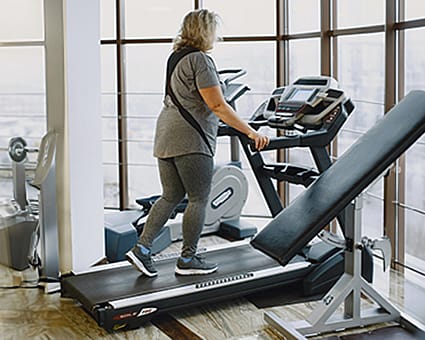
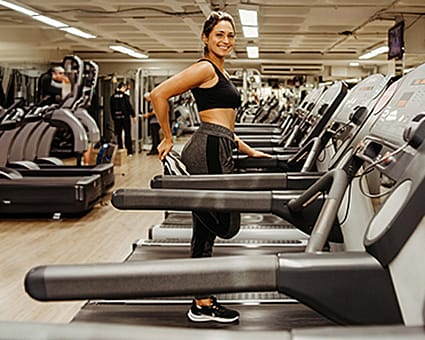
Professional treadmills are specifically designed for intensive use in gyms, physiotherapy centers, hotels, or other commercial spaces. They are usually more durable, have more powerful motors, and can withstand prolonged intensive use by multiple people per day. These treadmills feature extensive training programs, advanced tracking functions, and often a larger running surface for greater comfort during intensive workouts. However, they are generally larger, heavier, and non-foldable compared to home-use treadmills. If you don’t need to move the treadmill often and want a little extra, a professional treadmill can also work very well at home.
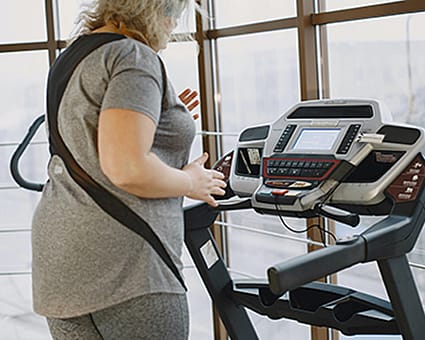
The choice between these two types of treadmills depends on your specific needs, frequency of use, and available space. Home users often prefer a more compact, user-friendly treadmill, while professionals and commercial businesses tend to choose a heavier model with even more advanced features and capabilities.
Usage intensity
The intensity of treadmill use is an important factor when selecting the right model. Depending on your goals, you can tailor the treadmill and its features accordingly. It’s crucial to choose a treadmill that matches your training intensity to achieve the best results.
Occasional use
If you plan to use your treadmill only occasionally, for example for light walks, there’s no need to invest in a highly advanced model. Treadmills for occasional use are often more compact, simpler in design, and have basic functions sufficient for occasional workouts. They are ideal for people who do not see the treadmill as their primary fitness equipment, but rather as a convenient option for days when outdoor training isn’t possible.
Regular use
For those planning to use their treadmill regularly, for example several times per week, it’s recommended to choose a more solid model with additional features and advanced functions. These treadmills often come with a more powerful motor, better shock absorption, and greater variety in training programs. They may also include extra features such as heart rate monitors, app connectivity (Zwift, JRNY, Xplore the World, Apple, and more), and personalized training logs, making them ideal for individuals who are serious about fitness and want to train consistently.
Intensive use
Treadmills designed for intensive use are the best choice for very high usage, such as in commercial spaces like physiotherapy centers, gyms, hotels, corporate fitness rooms, and holiday parks. They are also suitable for dedicated runners and professional athletes. These models are built to withstand daily, prolonged, and heavy workloads. They feature a robust construction, powerful motors, advanced cushioning systems, and a wide range of training programs and functions. Such treadmills often include extras like integrated entertainment options, interactive workouts, and advanced training data tracking. They are ideal for users requiring high training intensity or aiming to reach specific fitness goals.
Treadmills for walkers
Walkers often need a stable and comfortable treadmill with a smooth running motion. Models with good shock absorption and a firm, yet not overly hard, running surface are ideal. Extra features such as adjustable incline can enhance the walking experience by simulating different terrains. Simple controls and a clear display to track distance and time are also appreciated. Walking speeds typically range from 4 to 6 km/h, a comfortable pace for most people to walk without excessive effort.
Recommended treadmills for walking are:
Treadmills for joggers
Joggers need a treadmill that provides a good balance between durability and comfort. A reasonable motor strength and reliable shock absorption are important for a smooth and pleasant running experience. As a jogger, it is also useful to have features like programmable training routines and adjustable incline, which help gradually increase your endurance. A treadmill suitable for both walking and light running can be ideal for joggers. Jogging usually occurs at speeds of around 6 to 9 km/h. This is a moderate pace that requires more effort than walking, but is generally still comfortable for longer periods.
Recommended treadmills for jogging are:
Treadmills for runners
Runners benefit from treadmills with a robust construction and a powerful motor capable of handling high speeds. A spacious running surface is important for a comfortable stride length, along with advanced cushioning systems to minimize joint impact. Advanced training programs and performance tracking, such as heart rate and calories burned, are also useful features for runners who want to monitor and improve their performance. Running speeds typically start around 9 km/h and can be significantly higher depending on fitness level and training goals. Trained runners can easily reach speeds of 12 km/h and above.
Recommended treadmills for runners are:
What to consider when buying a treadmill?
Treadmills come in many different types, so it’s important to first consider your personal needs and preferences, as we discussed earlier. Once you have a clear understanding of your requirements, you can start looking at the technical aspects of a treadmill. Important components to look at include:
- The motor power
- Speed
- Incline
- The size of the treadmill and placement space
- Maximum weight capacity
- Construction and weight
- Running surface of the treadmill
- Cushioning of the running deck
- Heart rate monitor
- Additional features
These aspects are covered in detail in our blog about tips for buying a treadmill.
The different types of treadmills
Broadly speaking, treadmills can be categorized as for home use and for professional use. Within these categories, we can further differentiate between foldable treadmills, non-foldable treadmills, manual treadmills, and more. Let’s take a closer look at them.
Foldable treadmills
Foldable treadmills are an excellent choice for those who prioritize saving space. These models are specifically designed to be easily folded and stored, making them ideal for smaller homes or multifunctional spaces. Despite their compact design, foldable treadmills often offer a surprising range of features and sufficient power for an effective workout. They are perfect for users who want to combine flexibility and functionality without compromising on the quality of their training experience.
Some recommended foldable treadmills are:
Non-foldable treadmills
Non-foldable treadmills are often more robust and durable than their foldable counterparts. They are designed for permanent placement and typically offer a larger running surface and greater stability, making them ideal for intensive workouts. These models usually feature more powerful motors, advanced cushioning systems, and a wide range of training programs. They are perfect for dedicated runners or for use in commercial gyms where treadmills are in continuous use. Their durability and advanced features make them an excellent investment for serious athletes and fitness enthusiasts.
Some recommended non-foldable treadmills are:
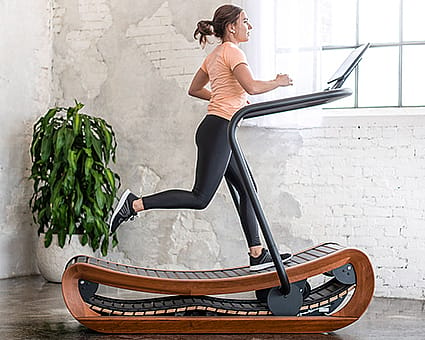
Manual treadmills without a motor
Manual treadmills, often referred to as sprintboards, offer a unique training experience because they are entirely powered by your own movement. Without an electric motor, these treadmills require more effort, resulting in a more intensive cardiovascular workout. They are often more compact and have a simpler design, making them ideal for smaller spaces. Manual treadmills are excellent for improving running technique and building muscle strength, especially in the lower body.
A recommended sprintboard is the:
Treadmills with incline and decline
Treadmills with incline and decline functions offer advanced training dynamics that mimic the experience of outdoor running. The incline function allows you to increase workout intensity by simulating uphill running, which is excellent for building muscle strength and boosting cardiovascular effort.
The decline function enables you to simulate downhill running, helping to train different muscle groups and improve balance. These features are not only useful for runners training for hilly courses but also for anyone seeking a varied and challenging treadmill workout. Treadmills with these functions are often equipped with advanced training programs and provide a realistic exercise experience that helps improve both endurance and strength.
Some treadmills with incline and decline are:
Treadmills for different budgets
Treadmills are available in a wide range of price points, making them accessible for different budgets. For a limited budget (around 799 to 1599), there are basic treadmills that offer essential features such as speed adjustment and basic tracking, perfect for beginners or occasional users.
Mid-range treadmills (approximately 1600 to 2499) provide more advanced features like programmed workouts, better cushioning, and sometimes connectivity with fitness apps. They are ideal for regular users seeking a balance between quality and price.
At the higher end of the spectrum, we find premium treadmills (price starting from around 2500) with powerful motors, advanced training programs, high build quality, and extra features such as interactive coaching or integrated entertainment options. These are mainly designed for commercial settings, intensive users, and fitness enthusiasts willing to invest in top quality and durability. Regardless of your budget, there is always a treadmill that fits your financial possibilities and training needs.
Conclusion
Choosing the right treadmill is the first step towards a more active and healthier lifestyle, and achieving your fitness goals, such as weight loss, improved endurance, or muscle building. The choice of the right treadmill depends on how you intend to use it and what your goals are, ranging from home use to professional use or commercial spaces like gyms or physiotherapy centers. Home treadmills are often more compact and quieter, ideal for regular walking, jogging, or running without too many advanced training features, while more extensive/professional treadmills are suitable for intensive use, offering advanced training programs and features.
The intensity of use is also an important consideration. For occasional use, simpler models are sufficient, while regular users benefit more from treadmills with powerful motors, better shock absorption, and advanced features such as heart rate monitors and entertainment options. For very intensive use, treadmills with a sturdy construction, advanced cushioning systems, and a wide range of training programs and functions are the best choice.
There are different types of treadmills available. Foldable treadmills are ideal for saving space, while non-foldable models are more robust and generally better suited for intensive training. Manual treadmills (sprint belts) are powered by the user’s movement and are perfect for improving running technique and building leg strength. Treadmills with incline/decline functions offer an advanced training dynamic by simulating uphill and downhill slopes, ideal for a varied and challenging workout.
Finally, treadmills are available in various price ranges, from basic models for a limited budget to premium models with advanced features for intensive use and commercial purposes. It is important to choose a treadmill that fits your financial possibilities and training needs.
Need help choosing your new treadmill?
If you want a new treadmill but are unsure which one to choose, our fitness specialists are happy to assist you with your questions. This way, you can make an informed decision and select the treadmill that perfectly suits your needs and preferences. You can contact our fitness specialists via +31(0)413-256800, send an email, or visit our showroom in Volkel, Netherlands.