


Buying an Elliptical Trainer: What to Look For?
9 Tips to Consider When Buying an Elliptical Trainer
Want to improve your fitness at home but not a fan of a treadmill or rowing machine? Then an elliptical trainer might be the perfect fitness equipment for you. With an elliptical trainer, you get a full-body workout anytime you want. No need to go outside in hot weather or during cold winter months – just train comfortably at home. Whether buying for home or commercial use, finding the right elliptical trainer can be challenging due to the wide variety available, from budget-friendly to high-end models.
To make your search easier, we have compiled the key tips into one clear article, so you can take them into account when choosing your ideal elliptical trainer. This will help you make the right choice and quickly enjoy the elliptical trainer that best fits your needs.
In this blog with tips to consider when buying an elliptical trainer:
- Why choose an elliptical trainer over outdoor training?
- Will you use the elliptical trainer at home or in a professional setting?
- Which features are important in an elliptical trainer?
3.1 Stride length
3.2 Drive: front or rear
3.3 Flywheel weight
3.4 Different resistance / brake systems
3.5 Display / console
3.6 Q-Factor
3.7 Maximum user weight
3.8 Elliptical size and placement
3.9 Features and functions
3.10 Number of training programs
3.11 Presence of multigrips - Cost of an elliptical trainer? Set your budget
- Which elliptical trainer brands are available?
- What are your training goals?
- Extra features for your elliptical trainer
- Test and view elliptical trainers on site
- Only buy from reputable retailers
- Conclusion
1. Why choose an elliptical trainer over outdoor training?
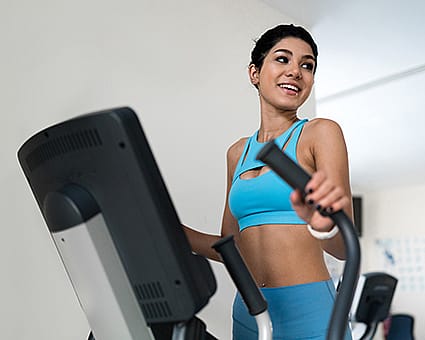
Outdoor training is great, but the weather outside isn’t always ideal. If you like to train regularly, you’ve probably noticed that it can get very hot in the summer or extremely cold, wet, dark, and slippery during the winter. In addition, not all paths are suitable for running, for example. Different surfaces such as asphalt or sand have varying impacts on your joints. One advantage of an elliptical trainer is that it provides low-impact workouts. This way, you can train comfortably at home at any time.
Some benefits of training on an elliptical trainer:
- Full control over resistance and intensity
- Train more efficiently and purposefully
- Enjoy training at home regardless of the weather
- Joint-friendly workouts (low-impact)
2. Will you use the elliptical trainer at home or in a professional setting?
Maybe you are looking for an elliptical trainer for home use or for a professional setting such as a physiotherapy practice, a gym, corporate space, or a hotel? Your needs and requirements may vary greatly.
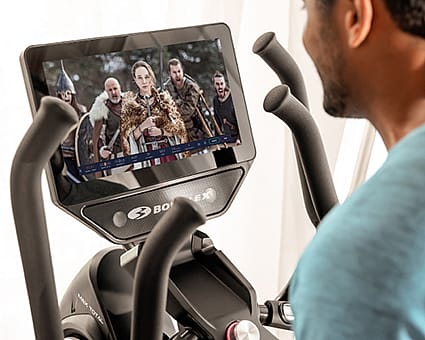
If you want an elliptical trainer for home use, you will likely have different requirements than if you are looking for a trainer for a professional environment. At home, you may want to train with a nicely integrated display to watch series or connect the elliptical trainer to apps.
For professionals, streaming and music services are less relevant. Here, you are likely more focused on how to best support your clients with rehabilitation, recovery, or providing a targeted yet enjoyable fitness experience. For rehabilitation and recovery, it is important that the elliptical trainer can be adjusted for the client and offers different resistance levels, from gentle to intensive, while also being low-impact on the joints.
To make the right choice, it is therefore important to understand how often you (or your clients) will use the elliptical trainer and which functions and features are important.
3. What features are important in an elliptical trainer?
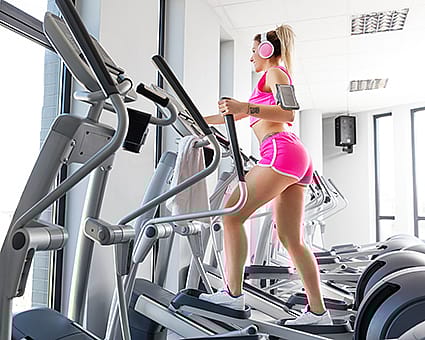
Do you want to buy an elliptical trainer? Then it is important that it fits your needs and preferences. The variety of elliptical trainers is quite extensive. There are several important aspects to consider when searching for the ideal elliptical trainer. To help you make the right choice, we will go through the details and the various features of elliptical trainers. This way, you can make your workouts more fun and challenging. Here are the key features at a glance:
3.1 Stride length and movement
3.2 Drive, front or rear driven
3.3 Flywheel weight
3.4 Different resistance / brake systems
3.5 Display / console
3.6 Q-factor
3.7 Maximum user weight
3.8 Elliptical size and placement
3.9 Features and functions
3.10 Number of available training programs
3.11 Presence of multigrips
3.1 Stride length and movement
The stride length is the most important factor along with the movement when buying an elliptical trainer. It has a major impact on how comfortable you can train.
But what exactly are stride length and movement?
The stride length on an elliptical trainer is the distance the pedals travel from the front to the back during a full motion. This is important because it directly affects how natural the movements feel. Generally, the taller you are, the longer the stride length should be for comfortable and optimal movement.
There are elliptical models with adjustable stride length and models where it is not adjustable. Some trainers even offer automatic stride length adjustment, ensuring a comfortable stride regardless of your height.
There is also the “movement” of the elliptical. This refers to the mechanism you stand on. Each brand has its own motion style – more circular, angled, longer, or shorter. The perfect stride depends on personal preference. The key is that the movement feels natural and comfortable.
Shorter strides emphasize vertical movement, while longer strides resemble cross-country skiing. Short strides mainly work the quadriceps, while longer strides engage hamstrings and glutes more.
The most important thing is that the elliptical feels comfortable for you. The ideal stride length is personal; some prefer short, others longer. The best way to judge is to test multiple elliptical trainers in-store.
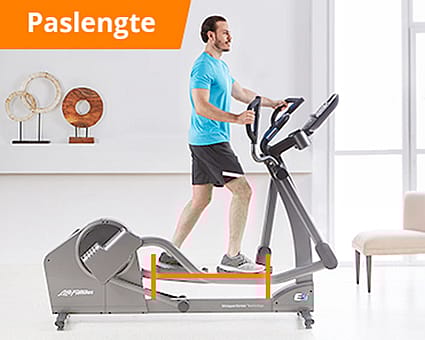
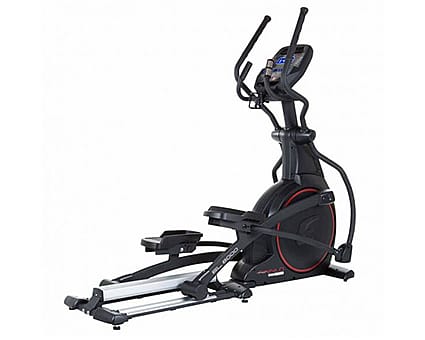
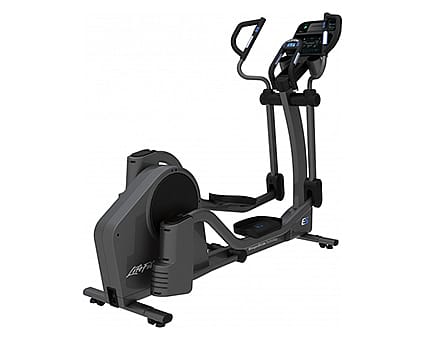
The difference between a front-driven (with the flywheel at the front) and a rear-driven (with the flywheel at the back) elliptical trainer mainly lies in the movement and structure of the machines. Front-driven ellipticals often have a higher front, which positions the arms and console higher. This allows you to stand more upright, which is especially comfortable if you are taller.
Front Driven Elliptical
- Movement: The movement on a front-driven elliptical tends to follow a flatter, elliptical path. This means the motion resembles walking or cross-country skiing.
- Structure: These ellipticals are often more compact and can feel more stable due to the weight of the flywheel at the front.
- Feel: Users may experience a more focused movement in the lower body muscles, sometimes resulting in a more intense workout.
Rear Driven Elliptical
- Movement: The movement on a rear-driven elliptical is more circular and resembles a natural step. This can feel more comfortable for some users, especially during longer training sessions. (Except for TechnoGym and Life Fitness, which have a flatter elliptical path, similar to cross-country skiing).
- Structure: These machines are often longer and may take up more space. The placement of the flywheel at the back provides a different weight distribution.
- Feel: The movement on a rear-driven elliptical is often perceived as smoother and more fluid.
The choice between a front-driven and rear-driven elliptical depends on your personal preference. Some users prefer the flatter movement of a front-driven model, while others find the more circular motion of a rear-driven model more natural. It is recommended to try both types to see which movement suits you best.
Some recommended front-driven ellipticals:
Some recommended rear-driven ellipticals:
3.3 The Flywheel Weight
An elliptical trainer is equipped with a flywheel that allows you to set the intensity of your workouts. In the past, the general rule was: the heavier the flywheel, the better and more comfortable the training. However, with modern technology, this difference has become smaller. A heavier flywheel still ensures smoother and quieter movement.
3.4 Different Resistance / Brake Systems
To meet different training needs, ellipticals feature a resistance/brake system. The resistance is determined by the braking of the flywheel, allowing you to adjust the intensity according to your preferences. Beginners can start with lower resistance and increase it as they get stronger, while advanced users can increase it for more challenging workouts. This is also ideal for rehabilitation after surgery or injury.
Ellipticals typically have three types of resistance systems: magnetic, induction, and magnet/air combinations.
The magnetic system adjusts resistance by moving the magnet closer or further from the flywheel. The magnet does not touch the flywheel, resulting in minimal wear. This system also ensures a quieter operation.
Another resistance type is the electromagnetic/induction system. Resistance is controlled by a coil; the stronger the magnet, the higher the resistance. This system is highly durable and precise, allowing even watt-based training.
Finally, the magnet/air resistance system provides very natural resistance and is popular for HIIT workouts.
3.5 Display / Console
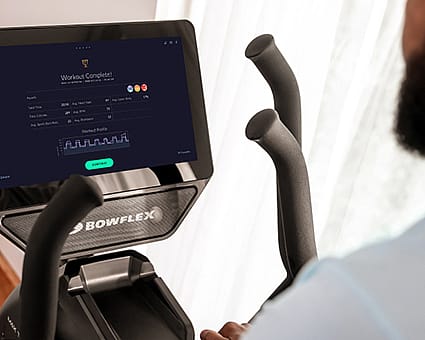
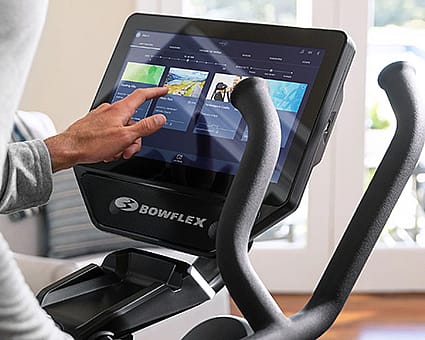
To make your workouts even more effective and enjoyable, an (advanced) display/console is essential. Displays provide important data such as:
- Workout duration
- Current speed
- Distance covered
- Rounds per minute (RPM)
- Wattage
- Calories burned
- Heart rate
Advanced ellipticals offer pre-programmed workouts, Bluetooth/WiFi connectivity, integration with fitness apps, and software tracking. High-end models may include streaming services and live coaching features.
3.6 The Q-Factor
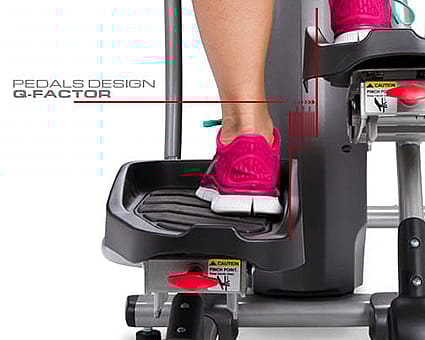
Some elliptical manufacturers indicate the so-called Q-factor of their machines. The Q-factor is the distance between the pedals, specifically between the outer edges of the pedals where your feet are placed. The Q-factor is an important criterion because it directly affects how natural the movements feel during exercise.
A smaller / narrower Q-factor means the pedals are closer together. This generally creates a more natural leg and hip position, similar to walking or running. Additionally, a smaller Q-factor helps reduce stress on the hips, knees, and ankles, providing a more comfortable workout and reducing the risk of injury.
With a large Q-factor, the pedals are farther apart. This may be comfortable for some athletes, but for others it can feel unnatural and put more strain on the joints.
Unfortunately, there is no ideal Q-factor since every body is different and personal preferences vary. Therefore, it is always recommended to try different ellipticals on-site to find the one that fits you best.
3.7 Maximum User Weight
Every elliptical has a maximum user weight. This weight varies per model. For each elliptical in our range, we indicate the recommended maximum weight. Your body weight affects the strain on the machine. If you weigh significantly more than the elliptical’s maximum capacity, it may wear out faster. Therefore, it is important to pay attention to the maximum user weight when choosing a new elliptical.
Example: If you weigh 125kg and the elliptical supports up to 100kg, wear may occur faster. We recommend choosing a machine that can support at least 20kg above your weight. Ellipticals with higher user weight usually have stronger construction (e.g., more steel, thicker beams). Manufacturers also often choose a different type of drive, such as stronger (double) bearings and/or rails to support the extra weight.
3.8 Elliptical Size and Placement
When buying an elliptical, it is important not only to consider functions and options but also the size of the elliptical and the space where you plan to place it. Ellipticals come in various sizes, so it’s important to choose one that fits in your room (or homegym) for comfortable training.
Size varies by model. Some ellipticals have a compact design suitable for smaller spaces, while others are larger and require more room. Knowing the available space in your room or gym will help you make the right choice. Low ceilings or sloped spaces also require consideration to ensure you have enough movement space, as you stand higher on an elliptical.
Besides size, you also need to consider movement space. During your workout, you will swing your arms and legs, so ensure sufficient space around the elliptical.
3.9 Features and Functions
Depending on the elliptical, additional features may be available. Higher-end models often include connectivity with fitness apps to track every workout. There are many other useful and fun features that help you get the most out of your workouts, such as:
3.10 Number of Pre-Programmed Workouts
Many ellipticals are equipped with a display. Generally, displays in the mid-to-high segment are more feature-rich. These programs vary in intensity and goal – from light cardio and fat burning to intensive interval workouts. The more programs available, the more variety and challenge you can add to your workouts, helping you stay motivated.
If you want to make your workouts even more fun and intense, you can often connect your elliptical to different fitness apps.
3.11 Presence of Multigrips
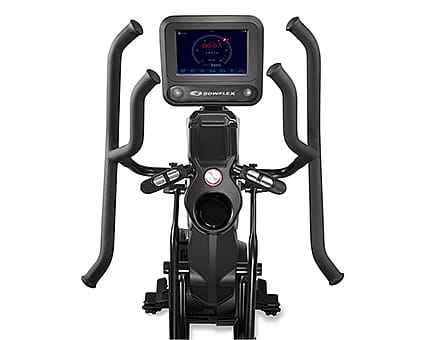
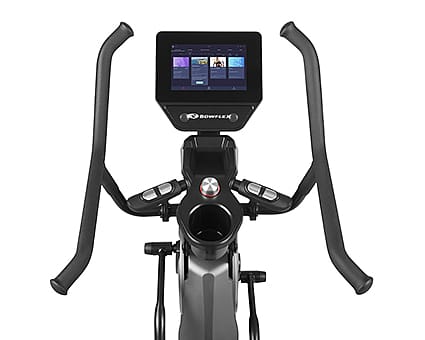
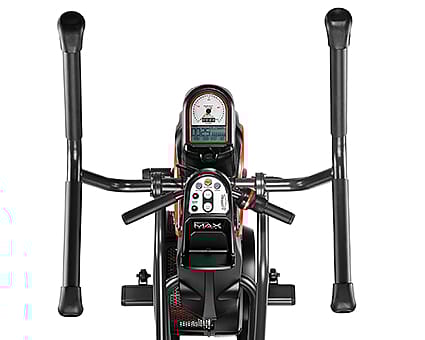
Multigrips are the handles present on an elliptical. As the name suggests, with multigrips you can hold the handles in different ways. These grips allow you to vary your hand and arm movements during workouts. This enables you to train different upper-body muscle groups in different ways, such as shoulders, arms, and back.
The presence of multiple grips is not only a way to make your workouts more intensive and effective but also helps to make your training less monotonous. By regularly switching grips, you can target different muscle groups while reducing stress on certain joints and muscles. This can help prevent overuse and injuries.
Additionally, multigrips can contribute to better posture during workouts. Because you can hold the grips in various ways, you can adjust and improve your posture.
Lorem Ipsum dolor sit amet
Lorem ipsum dolor sit amet, consetetur sadipscing elitr, sed diam nonumy eirmod tempor invidunt ut labore et dolore magna aliquyam erat, sed diam voluptua. At vero eos et accusam et justo duo dolores et ea rebum. Stet clita kasd gubergren, no sea takimata sanctus est Lorem ipsum dolor sit amet. Lorem ipsum dolor sit amet, consetetur sadipscing elitr, sed diam nonumy eirmod tempor invidunt ut labore et dolore magna aliquyam erat, sed diam voluptua. At vero eos et accusam et justo duo dolores et ea rebum. Stet clita kasd gubergren, no sea takimata sanctus est Lorem ipsum dolor sit amet.
4. Was kostet ein Crosstrainer? Bestimme dein Budget für den Crosstrainer
Der Kaufpreis eines Crosstrainers ist einer der wichtigsten, wenn nicht der wichtigste Punkt bei der Suche nach dem perfekten Crosstrainer. Der Crosstrainer sollte schließlich deinen Wünschen und Bedürfnissen entsprechen und gleichzeitig in dein Budget passen.
Ein Basis-Crosstrainer ist bereits ab ca. 699,- erhältlich, wie der Flow Fitness Glider DCT2000i. Möchtest du lieber einen Crosstrainer, mit dem du zu Hause ausgiebig trainieren kannst? Dann liegt die Preisspanne ungefähr zwischen 1.200 und 2.000,-. Hierzu zählen der Schwinn Crosstrainer 570E oder der Sole Fitness E25. Willst du einen noch umfangreicheren und luxuriöseren Crosstrainer? Dann liegst du bei etwa 2.100 bis 5.000,-, z. B. Matrix E50 XR oder Life Fitness E5 Go Console. Wir haben State-of-the-Art Crosstrainer bis über 16.000,- in unserer Kollektion. Für jeden Bedarf haben wir den passenden Crosstrainer. Wenn du unsicher bist oder Beratung benötigst, kannst du jederzeit unsere Crosstrainer-Spezialisten kontaktieren.
6. What are your training goals?
The great thing about an elliptical trainer is that it is a versatile fitness machine that you can use for various training goals. An elliptical always provides an effective cardio workout and can help you achieve different objectives, such as:
Improving cardiovascular health: One of the main reasons to train on an elliptical is to improve your heart and lung condition. By training regularly, you enhance your endurance and improve the efficiency of your heart and lungs.
Weight loss and fat burning: Ellipticals are ideal for anyone looking to lose weight and burn fat. The combination of cardio and light strength training makes it an effective way to burn calories and boost your metabolism.
Muscle building and toning: Additionally, training on an elliptical helps strengthen various muscle groups including legs, glutes, back, arms, and core. By adjusting the resistance, you can increase the intensity and go for more challenging workouts.
Rehabilitation training with low-impact: If you are recovering from an injury or rebuilding strength after surgery, you can train on an elliptical with low impact. Low-impact reduces stress on your joints compared to activities like running.
7. Extra features for your elliptical
Ellipticals come in many different versions from mid-range to premium. In addition to the previously discussed functions and options, you can also look at other extras. For example, do you want a bottle holder, speakers for music, or even small fans to keep you cool in addition to your console? There are plenty of possibilities. Besides these extras, you can also consider additional accessories such as:
Special floor mats
Special floor mats protect your floor from scratches, dents, and sweat. Place a mat at the desired spot and then place the elliptical on it. Make sure to check the size of your elliptical and ensure the mat is slightly longer and wider than the machine. For example, choose the Tunturi protection mat 200 x 95 cm.
Accessories to make your workouts even more fun
If you want to expand your workouts and make them even more enjoyable, you can use a heart rate chest or arm strap. This allows you to train in specific heart rate zones. View all accessories
8. Test and try the elliptical on-site
Have you found the ideal elliptical? Then you may want to test it before purchasing. Most of the ellipticals we offer in our webshop are also available in our showroom. If desired, you can view, try out, and receive additional advice.
9. Only buy from retailers with reputable certifications
As you have read, there are several factors to consider when looking for the perfect elliptical. Fortunately, we have made the choice easier for you by only offering ellipticals that we recommend. This way, you only need to focus on choosing your favorite brand, desired features, and budget.
As an extra tip, always check before purchasing if the webshop is affiliated with one or more certifications and guarantees. We are affiliated with Thuiswinkel Waarborg and Trustpilot, which have strict requirements for quality, regulations, and legislation, giving you extra assurance when buying.
Conclusion
If you want to buy an elliptical trainer, there are several important criteria to consider. First, it is crucial to determine the purpose of use: is the machine intended for home use or for a professional environment? This affects the required specifications and functions of the elliptical trainer. Additionally, the stride length / movement and the drive type (front or rear drive) are important for a comfortable workout, as they influence the range and type of motion.
The flywheel weight also plays a role; a heavier flywheel provides smoother motion. The resistance system is important to adjust the intensity of your workouts. The console of the elliptical trainer is another key element, especially if it offers advanced functions such as tracking training data and accessing various training programs.
The Q-factor, which is the distance between the pedals, also affects training comfort. A smaller Q-factor simulates a more natural stride. It is also important to consider the maximum user weight and the size of the elliptical trainer, so that it fits both your physical capabilities and the available space.
Budget also plays a significant role; there are various price categories available, ranging from entry-level to luxury models. The choice of model should also align with your training goals, such as improving cardio, losing weight, or building muscle.
Finally, it is crucial to purchase an elliptical trainer from a reliable retailer. If possible, we always recommend testing the machine before buying. These points together form the essential criteria for a well-considered decision when purchasing your new elliptical trainer.
Would you like to buy an elliptical trainer and need advice or additional information?
Our elliptical trainer specialists are happy to help you with any questions about the equipment. This way, you can make a well-informed choice and optimize your workouts. You can contact our specialists by phone at +31(0)413-256800, by email, or visit our showroom, United States.